On 1 April 2018, the Iroha group held a workshop on the basics of disaster preparedness. Download the report (Japanese PDF).
About the Iroha group
Iroha is an independent study group led by health and welfare professionals in Miyazaki City. It brings people together around disaster preparedness to strengthen the community’s ability to respond.
Members include staff from Miyazaki University’s psychiatric nursing, psychiatry, emergency and disaster medicine, and community medicine departments, and members of local mental health social work, dental, care management and social work associations and the Hoseikai social welfare organization.
Workshop overview
There were 94 adults and 24 children. Staff took part in the training alongside attendees. The workshop aimed to help everyone develop skills to respond to disasters, and participants were involved throughout.
Iroha representative Goto welcomed participants and introduced the group. Dietitian Kai explained why cooking in heat-resistant bags is useful in a disaster. Participants prepared rice, curry, spaghetti and mackerel in tomato sauce, and tried making pilaf by adding vegetable juice to a pouch of precooked dried rice. Public health nurse Harada explained hand hygiene and demonstrated how to use spray hand sanitizer before handling food. There were a few hiccups with bags inflating or going into the pot at different times. No one was injured or burned.

While the food cooked, participants tried equipment and spaces that make a difference in an evacuation shelter: cardboard beds, blankets, a Wrappon toilet, a changing tent and quieter foil blankets. Children worked together to assemble a new type of cardboard bed.
Over curry, pasta and pilaf, a Miyazaki City representative explained what welfare shelters provide. The director of Hoseien described how the facility sheltered local residents and its service users during a typhoon 15 years earlier.
Goto and a representative of Bean Stalk Snow explained oral care during disasters. Participants tried cleaning the inside of their mouths with oral wipes, which look like body wipes and are easy to use.
At the end of the workshop, participants recalled the date of Disaster Preparedness Day and wrote on sticky notes what they planned to do by then, about six months later. Plans included checking emergency supplies and shelter locations, cooking in bags and trying emergency food. Participants posted their notes on the Japan Dietetic Association Disaster Assistance Team vehicle and on a whiteboard.
Thanks to sponsors, participants took home emergency food and oral care supplies. The Miyazaki Nichinichi Shimbun, UMK and NHK attended. UMK broadcast a report that evening, and NHK covered the workshop and Iroha’s work on its morning program on 17 April.
Attendance
- 94 adults
- 24 children
Preparations
Hoseien made it possible to bring in cardboard beds, a Wrappon toilet and emergency food samples in advance.


With many activities scheduled in a short time, staff went through the program repeatedly the day before, adjusting quantities and the layout. Staff from Miyazaki met with colleagues from Kansai and Kagoshima in the evening to review the schedule and precautions together.
Photos from the workshop
Setting up


Left: A dietitian explains how to cook in bags. Right: Preparing food for about 100 people.


Left: Staff considered waste management, a common issue in shelters. Right: Staff organized the packing of emergency food and oral care kits.
Registration and opening


Shoe covers helped keep dust out of the shelter space.

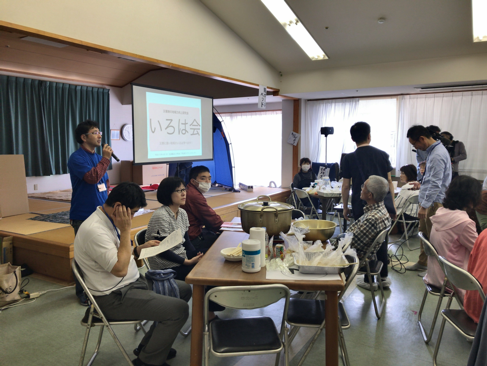
The opening remarks introduced Iroha’s aims and work.
Cooking in bags


Participants sanitized their hands before cooking.

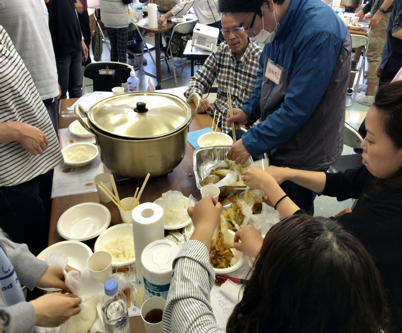
Participants started cooking as they learned why the method is useful in a disaster.


Left: Some bags need the air squeezed out before cooking. Right: Participants tried ways to prepare emergency food.


Adults and children shared the work and cooked together.
Trying shelter equipment
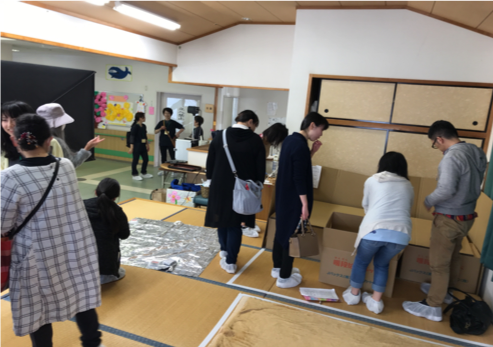

Participants lay down and compared spaces with cardboard beds and spaces with only blankets.


Left: The JDA-DAT vehicle, usually based in Kobe, visited Miyazaki. Right: Panels showed past Japan Dietetic Association activities.


Left: Supplies for oral care in disasters. Right: Equipment that helps people use toilets as normally as possible during a disaster.
Tasting the food


The curry rice, pasta and chicken rice were ready.


Participants were surprised that they could make hot, tasty food in disaster conditions.
Welfare shelters


Miyazaki City explained how welfare shelters work.
Hoseien’s experience


Left: The facility director recalled when Hoseien served as a shelter. Right: A talk on rehabilitation and support for everyday life during disasters.
Oral care
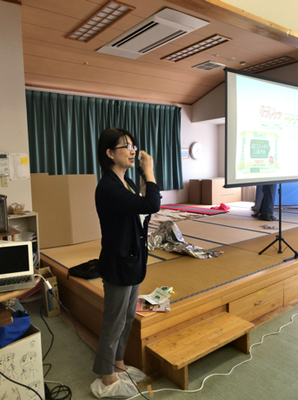

Participants learned how to clean their mouths after eating in disaster conditions.
Plans for Disaster Preparedness Day
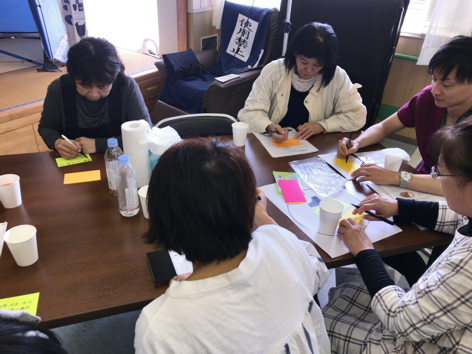
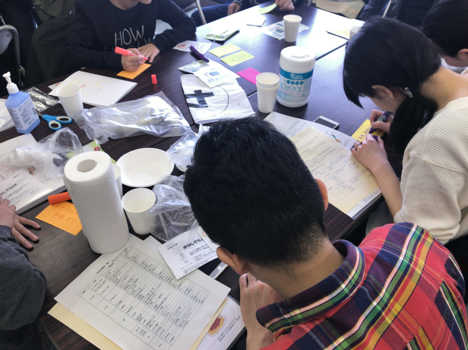
Participants wrote down what they intended to do in the next six months to prepare.


The notes were displayed alongside the last of the cherry blossoms.
Take-home oral care supplies

Sponsors provided oral care kits and helped participants learn how to clean their teeth without water. We hope the kits encourage participants to keep these supplies on hand and think about what they need for daily life in a disaster.
Expenses
| Payer | Item | JPY |
|---|---|---|
| Iroha group | Travel for Kagoshima Dietetic Association staff and the JDA-DAT vehicle | 20,000 |
| Goto Dental Clinic | Event insurance | 7,500 |
| Toothbrushes | 6,000 | |
| Miyazaki University | Leased equipment | 100,440 |
| Food ingredients | 17,599 | |
| Consumables | 30,183 | |
| Cardboard beds | 49,594 | |
| Total | 231,316 |
Hoseien provided the venue, parking, water, gas and electricity.
Sponsors
Japan Safety, the JDA-DAT Kizuna Project, Bean Stalk Snow, Sunstar, Kagome, Alpha Foods, Toasu, 内外歯材, Yoshida, and ジージー.
Supporting and co-organizing organizations
Miyazaki City and Miyazaki JRAT supported the workshop. Miyazaki University’s departments of psychiatric nursing, psychiatry, emergency and disaster medicine, and community medicine co-organized it with the Miyazaki mental health social workers’ association.

Thank you to all the sponsors, supporting organizations and co-organizers.
Report authors: Goto, Harada and Koda, Iroha group. For inquiries about the report, contact Iroha representative 後藤大, Goto Dental Clinic, 708-1 Hoji, Miyazaki City, Miyazaki 880-0123, Japan. Email: dai-g (at) hotmail.co.jp.